
The Illusion of Velocity
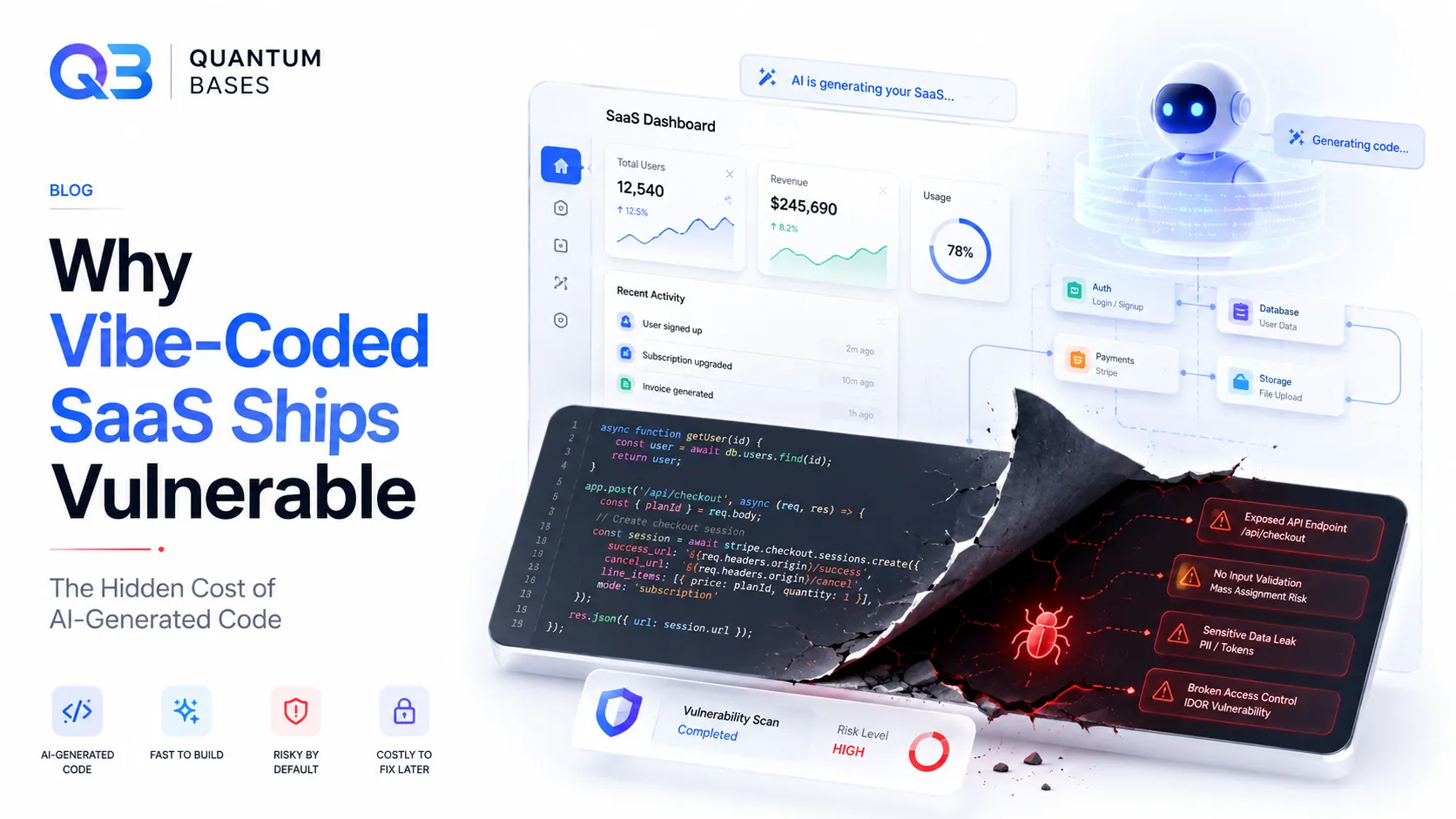
AI coding assistants like Cursor, Copilot, and Claude have fundamentally changed software engineering. They allow single developers to "vibe-code" , shipping entire full-stack applications in days instead of months. The velocity is intoxicating.
However, after auditing dozens of AI-generated SaaS platforms over the past year, we've found a consistent and dangerous pattern: AI writes code that works, but it does not write code that is secure by default.
The models are trained to optimize for functional completion. They will eagerly give you a working API endpoint, but they will rarely enforce proper authentication, input validation, or rate limiting unless explicitly and repeatedly prompted to do so.
The Top 3 AI-Generated Vulnerabilities
Here are the most common critical flaws we find during our SaaS security reviews of AI-generated codebases:
1. Broken Object Level Authorization (BOLA)
When asking an AI to write an endpoint to fetch a user profile or document (e.g., GET /api/documents/:id), the AI almost always writes a simple database query matching the ID.
What it misses is the ownership check. It fails to verify if the req.user.id actually owns the document matching req.params.id. This allows any authenticated user to simply enumerate document IDs and steal data belonging to other tenants.
2. Mass Assignment Vulnerabilities
When building update forms, AI tools frequently suggest taking the entire req.body and passing it directly into the ORM (like Prisma or TypeORM).
// Dangerous AI-generated code
const updatedUser = await prisma.user.update({
  where: { id: userId },
  data: req.body // Attackers can inject { isAdmin: true } here!
});
If an attacker adds "isAdmin": true or "billingPlan": "enterprise" to the JSON payload, the database will happily update those protected fields because the AI didn't whitelist the allowed fields.
3. Server-Side Request Forgery (SSRF) in AI Integrations
If your SaaS fetches data from user-provided URLs (like scraping a webpage to summarize it), AI-generated fetching logic rarely includes network boundaries. Attackers can provide URLs like http://169.254.169.254 to exfiltrate internal cloud metadata or hit internal microservices.
How to Fix the "Vibe-Coding" Pipeline
You don't need to stop using AI. You need to change how you use it.
- 1. Shift-Left Security Prompts: Your system prompts for Cursor/Copilot must explicitly define your security architecture. (e.g., "Always use Zod for input validation. Always verify tenant ID on database queries. Never pass req.body directly to the ORM.")
- 2. Automated SAST in CI/CD: Since AI generates code rapidly, humans cannot manually review every line. You must integrate tools like Semgrep or Snyk into your pull request workflow to catch BOLA and Mass Assignment automatically.
- 3. Third-Party Audits: Before a major launch or enterprise contract, have a human engineering team (like Quantum Bases) review the critical authentication, authorization, and payment flows. AI is a great co-pilot, but it should never be the final sign-off on enterprise security.