
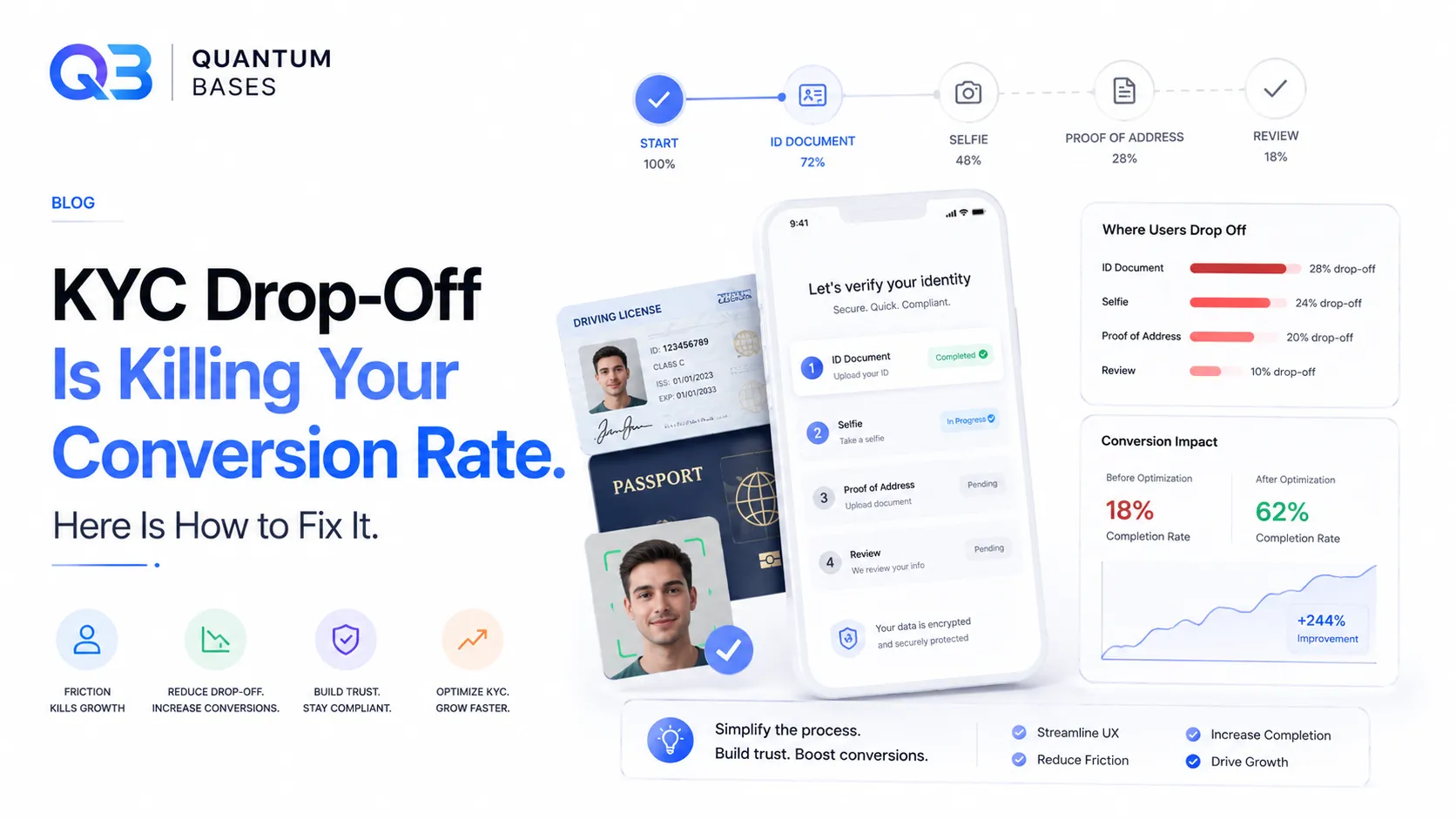
The Growth vs. Compliance Paradox
Every fintech founder faces the same brutal reality: you spend hundreds of dollars acquiring a user, they download your app, they create an account, and then they abandon the platform the moment you ask for their ID.
Industry averages show that financial apps lose 40% to 60% of their users during the Know Your Customer (KYC) flow. Most founders accept this as the inevitable "cost of compliance."
It is not. It is the cost of bad UX and rigid engineering.
The Problem with Legacy Integration
Most teams integrate a KYC vendor (like Onfido, Jumio, or Persona) by simply dropping their web SDK into the middle of the onboarding funnel. The user hits a wall, is forced to find their wallet, take photos in good lighting, and wait 60 seconds while a spinner blocks the screen.
If the photo is slightly blurry, the vendor rejects it. The user has to start over. By the second failure, the user closes the app forever.
Engineering a High-Conversion KYC Pipeline
At Quantum Bases, we've rebuilt KYC infrastructures for multiple regulated exchanges. Here is how we engineer flows that convert at 85%+.
1. Progressive Onboarding
Do not front-load KYC. Let the user explore the app. Let them see the dashboard, configure their profile, and understand the value of the platform. Only trigger the heavy ID verification flow when they attempt their first deposit or withdrawal. You want them highly motivated before you introduce friction.
2. Asynchronous Processing
Never make the user wait on a loading spinner while the vendor analyzes the document.
Once the image is uploaded, immediately show a success screen: "Thanks! We're reviewing your documents in the background. Feel free to explore the app."
On the backend, process the images asynchronously via webhooks. When the approval comes through 30 seconds later, push a WebSocket event to the frontend that triggers a celebratory toast notification and unlocks the restricted features.
3. Smart Fallback Routing
No single KYC provider is perfect globally. Provider A might have a 95% acceptance rate for US passports but a 40% acceptance rate for Indonesian IDs.
Instead of rejecting the user when Provider A fails, architect a "waterfall" routing system. If Provider A returns an "inconclusive" result due to glare or a complex ID format, automatically pipe the same images to Provider B in the background. Only prompt the user to retake the photo if both providers fail.
Compliance is mandatory. Friction is optional. Treat KYC as an engineering optimization problem, not just a regulatory checkbox.