
The Enterprise Blockade
If you sell B2B SaaS, eventually you will hit a wall. An enterprise prospect will love your product, agree to the pricing, and then hand you a 200-question security questionnaire and ask for your SOC2 report.
If you don't have one, the deal dies.
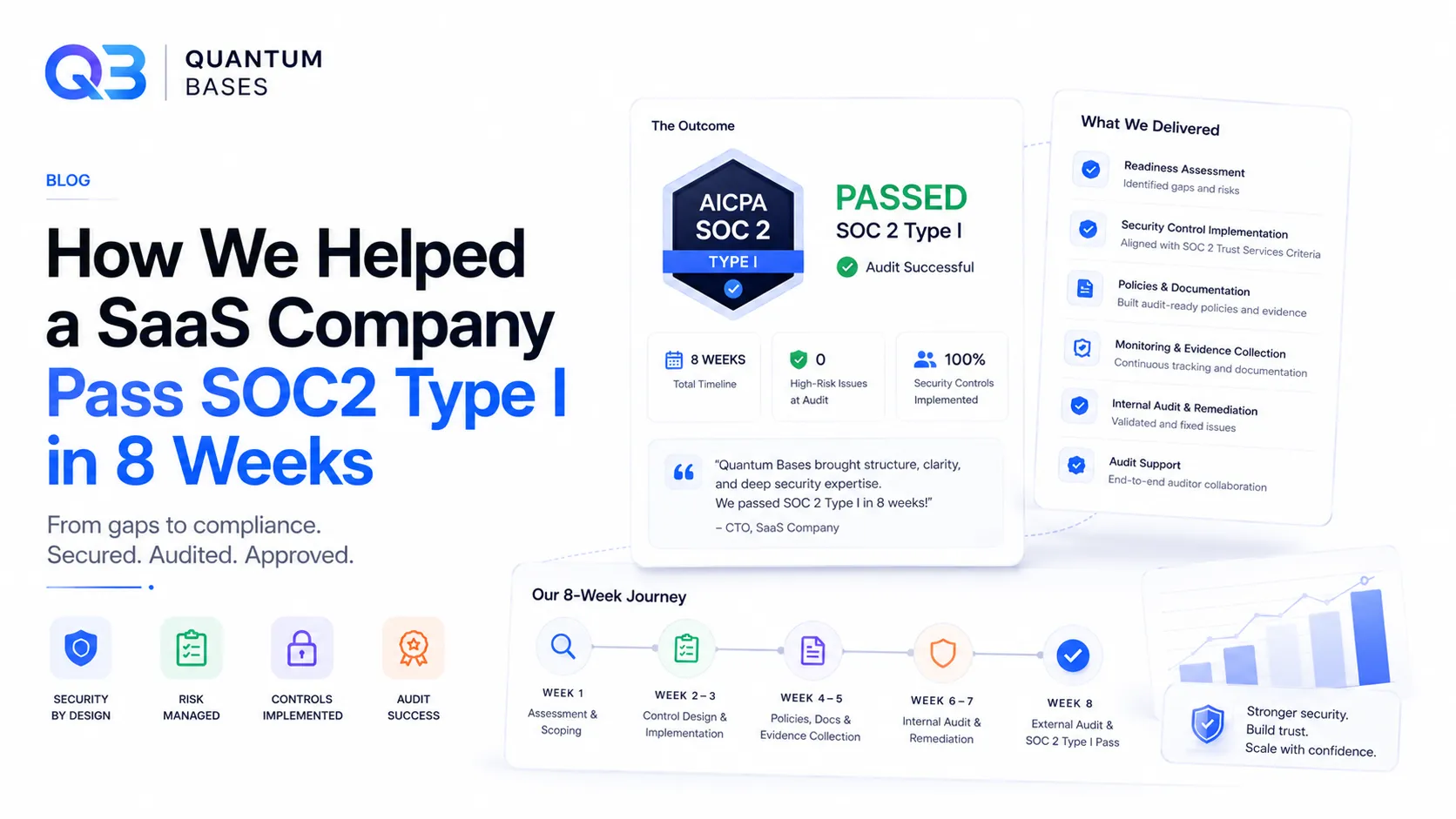
Traditionally, achieving SOC2 Type I compliance is a grueling 6-to-12-month process involving endless spreadsheets, consultants, and engineering slowdowns. Recently, we helped a fintech client achieve their SOC2 Type I in just 8 weeks. Here is the blueprint.
Step 1: Embrace Continuous Compliance Platforms
The days of managing SOC2 in Google Sheets are over. The first thing we did was implement Vanta (though Drata or Secureframe work similarly well).
These platforms integrate directly with your cloud provider (AWS/GCP), version control (GitHub), identity provider (Google Workspace/Okta), and HR systems. Instead of taking screenshots of AWS configurations to prove encryption is enabled, the platform continuously monitors the API and automatically flags non-compliant resources.
Step 2: Automating Infrastructure as Code (IaC)
A major part of SOC2 is proving that your infrastructure is secure, predictable, and audited.
The client had a habit of clicking around the AWS console to provision resources. We locked down console write access and migrated their entire infrastructure to Terraform.
This solved three SOC2 requirements simultaneously:
terraform apply.Step 3: Enforcing Least Privilege Access
The auditors want to see that engineers only have access to what they need. We implemented Role-Based Access Control (RBAC) across the board:
- GitHub: Enforced branch protection rules. Nobody can push directly to
main. - AWS: Implemented SSO via Google Workspace. Developers log in with temporary STS tokens that expire after 1 hour, scoped strictly to the resources they need.
- Databases: We set up a Bastion host (Teleport) for database access, which records all SQL queries executed by engineers in production for audit logging.
Step 4: The Boring (But Necessary) Policies
SOC2 requires written policies (Data Classification, Incident Response, Access Control, etc.). We used the templates provided by Vanta, heavily customized them to match the client's actual engineering reality, and rolled out a mandatory training module for the team.
The Result
When the auditors arrived, there was no scrambling. Because the infrastructure was codified and the monitoring was automated, the audit took less than two weeks. Total time from kickoff to the final SOC2 Type I report: 8 weeks.